
Expert Support
Available 24/7 via chat
Available 24/7 via chat
Sitaphal holds a special place in Indian gardens and kitchens alike. Whether you call it sugar apple, custard apple, sharifa, or by its botanical name Annona squamosa, this beloved tropical fruit tree brings both beauty and abundance to any garden. What makes sitaphal truly rewarding for home gardeners is how forgiving it is—the difficulty level is genuinely easy to grow, even for beginners. Better still, grafted varieties like the one available from Nurserylive fruit remarkably fast, meaning you won't wait years for your first harvest. Whether you have sprawling garden space or just a sunny corner on your balcony, sitaphal adapts beautifully to Indian growing conditions and pot cultivation.
Sitaphal is a deciduous to semi-deciduous tree native to tropical regions, and it thrives across India's diverse climates. The grafted varieties represent a significant advantage: they skip the slow juvenile phase of seed-grown trees and produce fruit-bearing branches within 1–2 years of planting. When you receive your sitaphal sapling (typically 24 inches tall), you're getting a head start that will save you 5–7 years compared to growing from seed.
The plant develops yellow-green flowers during spring and summer, which attract pollinators and eventually mature into the bumpy, heart-shaped fruits you'll harvest in the same seasons. A mature sitaphal tree reaches 10 to 20 feet in height, though container-grown plants remain more compact and manageable. The dense foliage creates a pleasant canopy, making it a dual-purpose addition to your garden—ornamental and productive.
| Care Aspect | Requirement |
|---|---|
| Light | More than 6 hours of direct bright sunlight daily |
| Water | Check soil moisture first; water when top 1–2 inches are dry |
| Soil | Well-drained, fertile, pH 6.5–7.5, rich in organic matter |
| Temperature | 25–41°C (optimal tropical range) |
Sitaphal is a sun-lover, and this is non-negotiable for fruit production. Your tree needs more than 6 hours of direct, bright sunlight each day. In India's climate, especially during the growing season (March to September), this is usually easy to achieve. Place your plant in the sunniest spot available—south or west-facing balconies and gardens are ideal.
Insufficient light leads to weak growth, fewer flowers, and minimal fruiting. If you're growing in a container, rotate it every 2–3 weeks to ensure even light exposure on all sides. During the intense heat of May–June, some afternoon shade in regions hotter than 40°C can prevent leaf scorch, but never compromise on total light hours.
Overwatering is the quickest way to kill a sitaphal tree, so develop a proper checking habit. Before watering, poke your finger or a small stick into the soil to assess moisture at a depth of 1–2 inches. Water only when this top layer feels dry to the touch. This prevents waterlogging and root rot, which thrive in overly wet soil.
During the monsoon (June–September), natural rainfall may provide sufficient water, so reduce your watering frequency significantly—you may skip watering entirely some weeks. In the dry season (October–May), water more regularly, typically every 2–3 days depending on your pot size and local temperatures. Grafted plants in containers dry out faster than those in open ground, so monitor more closely. Always use water at room temperature; cold water can shock the roots.
Your sitaphal's foundation is well-drained, fertile soil rich in organic content. The ideal pH range is 6.5 to 7.5—slightly acidic to neutral. If you're potting your tree, use a mix of garden soil, coconut coir, and well-rotted compost in equal parts, adding perlite or sand (20% by volume) for drainage. For ground planting, prepare planting pits (2 feet × 2 feet × 2 feet) filled with this enriched mixture.
Nutrition is critical for flowering and fruiting. During the main growing season—June and July—feed your sitaphal with organic fertilizer. Neem cake, vermicompost, or well-decomposed farmyard manure work excellently. Apply 2–3 handfuls around the base, keeping it 3–4 inches away from the trunk. This practice aligns perfectly with the monsoon season when the plant is actively growing. In months outside June–July, minimal feeding is needed; an occasional mulch refresh with dried leaves or coir is sufficient.
Sitaphal is a tropical crop, and India's temperature range of 25–41°C suits it perfectly. This tree actually prefers warmth and won't thrive in cold climates. In northern India during winter (December–February), if temperatures drop below 10°C, move potted trees indoors or provide frost protection with cloth coverings.
Humidity is generally not a limiting factor across most of India. The monsoon months (June–September) provide natural humidity, which sitaphal welcomes for growth. However, ensure good air circulation to prevent fungal issues in very humid, stagnant conditions. If growing in a sheltered balcony, allow air to flow freely around the plant.
While sitaphal can be grown from seed, the grafted varieties you'll purchase are far superior for home gardeners. Grafting is why your plant fruits so much faster—within 1–2 years instead of 5–7. If you ever want to propagate, the best method for home gardens is air layering (marcottage), which takes 6–8 weeks and produces a flowering-age plant within 2–3 years.
For air layering, select a healthy branch (pencil-thick), make a small upward cut, apply rooting hormone, wrap it in moist sphagnum moss inside a plastic sheet, and keep moist. Once roots appear, cut and pot the new plant. However, most gardeners find it simpler to source grafted saplings from reliable nurseries like Nurserylive, ensuring strong, healthy plants from the start.
Sitaphal is remarkably hardy, but a few issues can arise. Fruit cracking occurs when watering is erratic—water consistently to prevent this. Mealybugs and scale insects occasionally appear on the undersides of leaves; spray with neem oil at 3% concentration every 2 weeks if noticed. Yellowing leaves often indicate poor drainage or nutrient deficiency; check drainage first, then apply a balanced organic fertilizer.
In the monsoon, watch for fungal leaf spot. Ensure good air circulation and remove affected leaves. If your tree doesn't flower despite good light and temperature, it may be in a vegetative phase; ensure you're feeding during the June–July growing season to encourage flower bud formation.
Ready to grow your own? Shop Sitaphal at Nurserylive →
Sitaphal, Annona squamosa (Grafted) - Plant The Sitaphal, also known as Custard Apple, is a tropical fruit-bearing tree renowned for its s...
View full detailsCombo Constituents Includes the Parijat Tree (Night-Flowering Jasmine), a culturally significant plant with fragrant flowers. Description The Pari...
View full detailsDescription Raat Ki Rani (*Cestrum nocturnum*), also known as Night Blooming Jasmine, is a fragrant shrub native to the Caribbean and Central Ameri...
View full detailsJasminum sambac, Mogra, Arabian Jasmine - Plant Jasminum sambac, commonly known as Mogra or Arabian Jasmine, is a fragrant flowering plant...
View full detailsRajnigandha, Tuberose - Plant The Rajnigandha, scientifically known as Polianthes tuberosa, is a captivating perennial plant renowned for ...
View full detailsCitronella, Odomas - Plant The Citronella plant, scientifically known as Cymbopogon nardus, is a tropical grass renowned for its aromatic ...
View full detailsDamascus Rose, Scented Rose (Any Color) - Plant The Damascus Rose, also known as Rosa damascena, is a timeless symbol of beauty and romanc...
View full detailsMiniature Rose, Button Rose (Any Color) - Plant The Miniature Rose, also known as the Button Rose, is a charming and compact flowering plant that ...
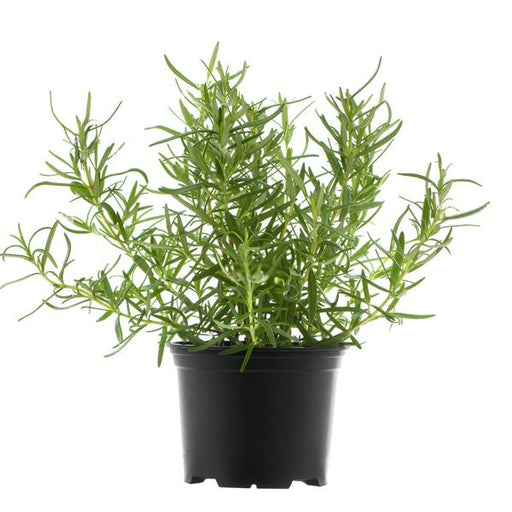
View full detailsRosemary - Plant Rosemary (Rosmarinus officinalis) is a fragrant evergreen herb native to the Mediterranean region. Known for its needle-like leav...
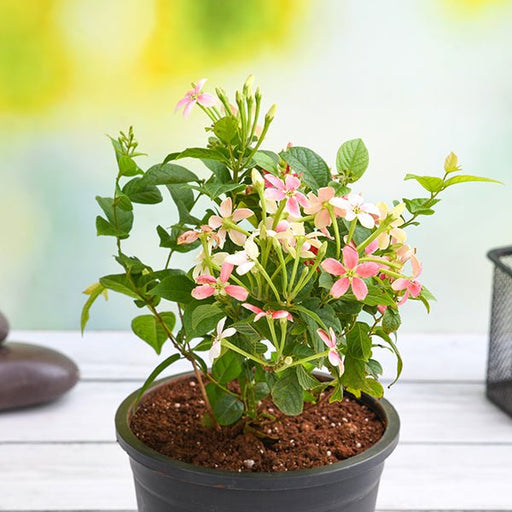
View full detailsMadhumalti Dwarf, Rangoon Creeper - Plant The Madhumalti Dwarf, also known as the Rangoon Creeper (Quisqualis indica), is a stunning perennial vin...
View full detailsBest 6 Plants for Perfect Indoor Garden Transform your living space into a lush oasis with our curated collection of the Best 6 Plants for a...
View full detailsBest 6 Plants for Perfect Indoor Garden Transform your living space into a lush oasis with our curated collection of the Best 6 Plants for a...
View full detailsMini Succulent Garden Pack Transform your space with our Mini Succulent Garden Pack, featuring a delightful collection of 4 any variety beautiful s...
View full details5 Best Fragrant Plants Transform your garden or indoor space into a fragrant paradise with our curated selection of the 5 Best Fragrant Plants. Th...
View full detailsSet of 2 Bonsai Looking Grafted Adeniums Transform your indoor or outdoor space with our exquisite Set of 2 Bonsai Looking Grafted Adenium...
View full detailsTop 4 Die Hard Succulents Pack Note: Plants included in this pack will be delivered in a 3-inch nursery pot (any color). Transform your indoor or ...
View full details5 Best Indoor Plants Pack Transform your living space into a lush oasis with our '5 Best Indoor Plants Pack.' This carefully curated collection fe...
View full detailsSet of 4 Evergreen Air Purifier Plant Pack Transform your indoor space into a lush, green oasis with our Set of 4 Evergreen Air Purifier Pla...
View full detailsTop 5 Pollution Killer Plants Pack Transform your living space into a breath of fresh air with our 'Top 5 Pollution Killer Plants Pack'. This care...
View full detailsPack of 3 Good Luck Jade Plants in Ceramic Pots Bring a touch of nature into your home with our Pack of 3 Good Luck Jade Plants, featuring...
View full detailsPortulaca Garden Pack (4 Plants + 4 Black Pots) Note- You will get any color (Assorted) potted Porulaca plant with this pack. Transform your garde...
View full details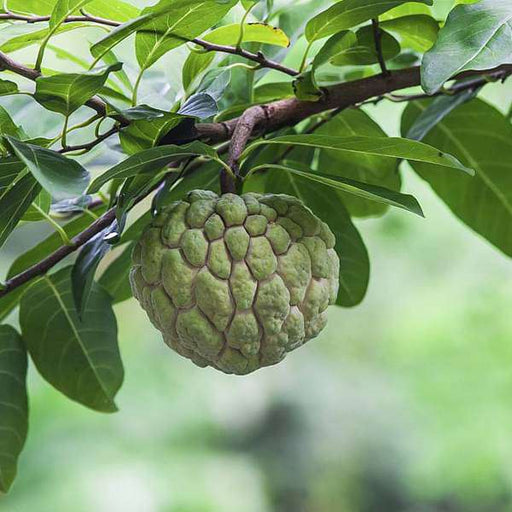





















Leave a comment