
Expert Support
Available 24/7 via chat
Available 24/7 via chat
The Gulmohar tree, known scientifically as Delonix regia, is one of India's most beloved shade trees—and for good reason. With its brilliant red and orange flowers that create a stunning canopy display from late spring into early summer, this fast-growing specimen is as practical as it is beautiful. Whether you're planting an avenue of trees or seeking a drought-tolerant shade provider for your garden, the Gulmohar is remarkably easy to grow and will reward you with years of vibrant blooms and reliable performance even in India's challenging climate.
The Gulmohar tree (Delonix regia) goes by many names across India—you'll hear it called Flamboyant Tree, Flame Tree, royal poinciana, Krishnachura in Hindi, and Kempu torai in South India. This tropical to subtropical tree is prized for its feathery, fern-like foliage and its spectacular late-spring and early-summer bloom period, when the entire canopy transforms into a blaze of red and orange-red flowers.
Gulmohars are naturally fast-growing trees that mature to impressive heights of 30 to 50 feet, making them ideal for avenue planting, parks, and large gardens. The specimens you'll receive are typically 24 inches (61 cm) tall at purchase, giving you a manageable young tree to establish in your garden. What makes this tree exceptional in the Indian context is its combination of drought tolerance, hardiness, and ease of care—qualities that make it perfect for both experienced gardeners and beginners.
| Aspect | Requirement |
|---|---|
| Light | More than 6 hours of direct bright sunlight daily |
| Water | When top 1–2 inches of soil feel dry to touch |
| Soil | Well-drained, fertile, rich in organic content; pH 6.5–7.5 |
| Temperature | Avoid exposure below 45°F (7.2°C) |
Gulmohars are sun-worshippers and need abundant direct light to thrive. Provide more than 6 hours of direct bright sunlight each day for best growth and flowering. In India's climate, this is rarely a limiting factor except in heavily shaded urban spaces or dense building clusters. The more sunlight your Gulmohar receives, the fuller its canopy will be and the more profuse its flowering.
If you're growing a young Gulmohar in a pot before transplanting, place it in a south or west-facing location. Once planted in the ground, choose an open spot where it won't be shaded by taller structures or trees, especially during the critical late-spring bloom period.
One of the Gulmohar's greatest strengths is its drought tolerance, but young trees still need consistent moisture as they establish. The key to proper watering is simple: before you water, poke your finger or a small stick into the soil to check moisture levels. Water only when the top 1 to 2 inches of soil feel dry to the touch.
This method prevents overwatering, which is the primary cause of stress in potted Gulmohars. During India's monsoon season, natural rainfall will likely handle most watering needs—in fact, you may need to reduce supplemental watering to prevent waterlogging. Once your tree is established, its deep root system will tap into soil moisture well below the surface, making it remarkably self-sufficient during dry spells.
Gulmohars grow well in soil that is well-drained and fertile, rich in organic content. The ideal pH range is 6.5 to 7.5, which fortunately covers the natural range of most Indian soils. If your garden has hard water or alkaline soil—common in many Indian regions—amend the planting hole with well-rotted compost or aged organic matter to improve drainage and add nutrients.
Feed your Gulmohar during the main growing season, which in India typically runs through June and July. Use an organic fertilizer that will nourish the tree without harsh synthetic chemicals. A balanced formulation or one with slightly higher phosphorus will encourage flowering. Once established, mature trees need minimal feeding and will draw nutrients from decomposing leaves and organic mulch around the base.
The Gulmohar is a warm-climate tree and should not be exposed to temperatures below 45°F (7.2°C). In most of India, this isn't a concern—even in cooler regions like the Nilgiris or parts of North India, winter temperatures rarely dip this low. However, if you're growing a young potted specimen in a very cold region during winter, protect it from frost by moving it to a sheltered indoor location or providing frost cover.
Humidity is generally not a limiting factor in India. The tree handles both the dry months and the monsoon's high humidity without complaint. What matters most is ensuring your tree receives ample sunlight and never stands in waterlogged soil.
Gulmohars can be propagated from seeds, which germinate readily when fresh. Soak seeds in warm water for a few hours before sowing in a well-draining seed-raising mix. Keep the soil consistently moist (not waterlogged) and place the tray in bright, warm conditions. Germination typically occurs within 1–2 weeks.
For quicker results and to clone a particularly fine specimen, you can also try propagation from semi-hardwood cuttings taken during the growing season. Dip the cuttings in rooting hormone and insert them into a moist, airy propagation medium such as perlite or sand mixed with compost. Bottom heat will improve success rates. Either method requires patience, but the reward is knowing you've grown your Gulmohar from the start.
Gulmohars are remarkably trouble-free, but watch for a few issues:
Ready to grow your own? Shop Gulmohar Tree at Nurserylive →
Gulmohar Tree, Delonix regia - Plant The Gulmohar Tree, scientifically known as Delonix regia, is a stunning tropical tree renowned for it...
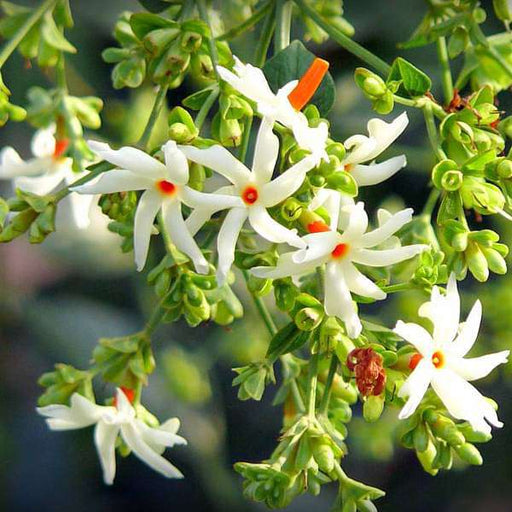
View full detailsCombo Constituents Includes the Parijat Tree (Night-Flowering Jasmine), a culturally significant plant with fragrant flowers. Description The Pari...
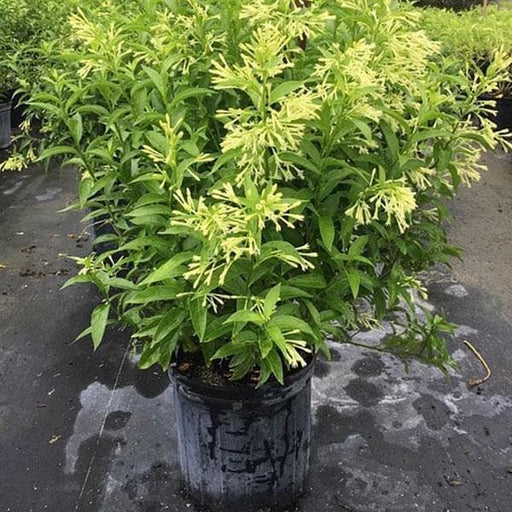
View full detailsDescription Raat Ki Rani (*Cestrum nocturnum*), also known as Night Blooming Jasmine, is a fragrant shrub native to the Caribbean and Central Ameri...
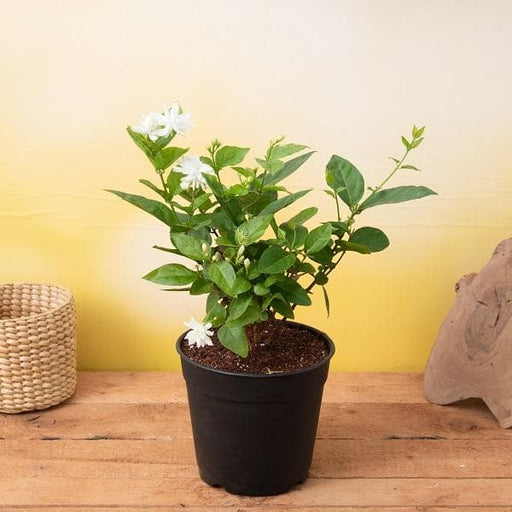
View full detailsJasminum sambac, Mogra, Arabian Jasmine - Plant Jasminum sambac, commonly known as Mogra or Arabian Jasmine, is a fragrant flowering plant...
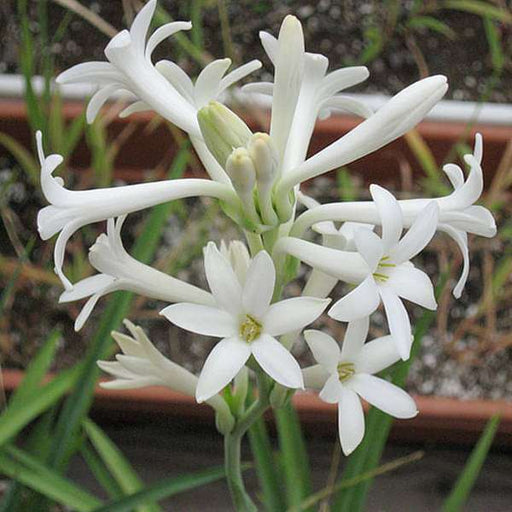
View full detailsRajnigandha, Tuberose - Plant The Rajnigandha, scientifically known as Polianthes tuberosa, is a captivating perennial plant renowned for ...
View full detailsCitronella, Odomas - Plant The Citronella plant, scientifically known as Cymbopogon nardus, is a tropical grass renowned for its aromatic ...
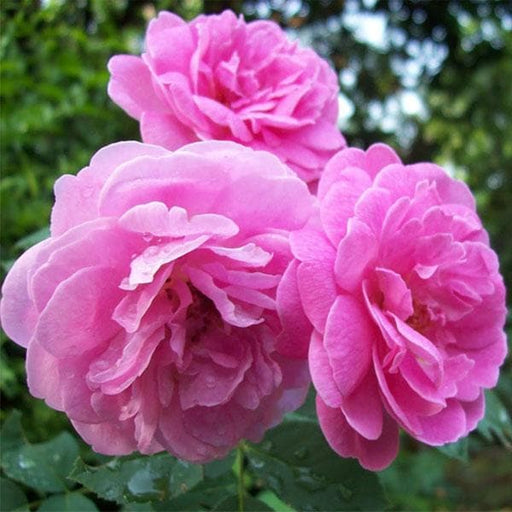
View full detailsDamascus Rose, Scented Rose (Any Color) - Plant The Damascus Rose, also known as Rosa damascena, is a timeless symbol of beauty and romanc...
View full detailsMiniature Rose, Button Rose (Any Color) - Plant The Miniature Rose, also known as the Button Rose, is a charming and compact flowering plant that ...
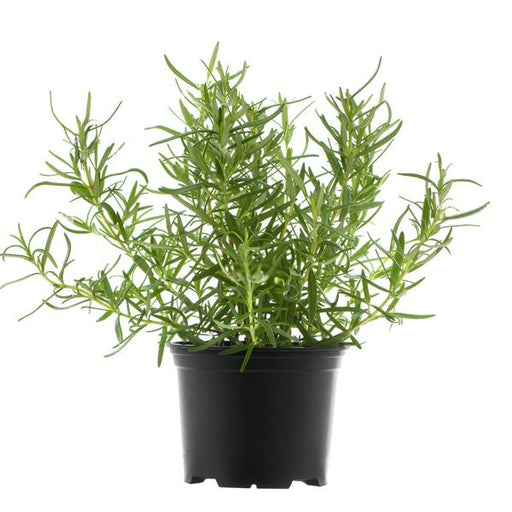
View full detailsRosemary - Plant Rosemary (Rosmarinus officinalis) is a fragrant evergreen herb native to the Mediterranean region. Known for its needle-like leav...
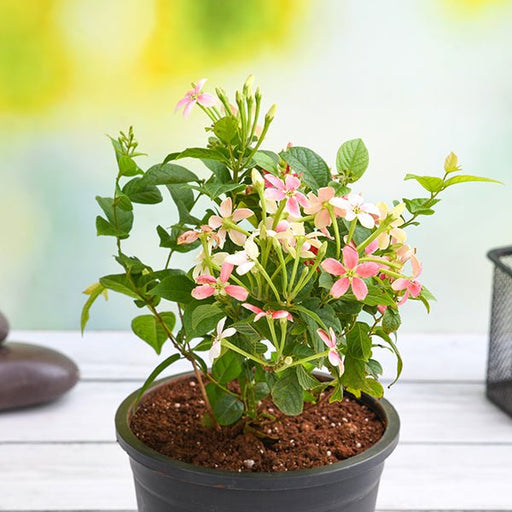
View full detailsMadhumalti Dwarf, Rangoon Creeper - Plant The Madhumalti Dwarf, also known as the Rangoon Creeper (Quisqualis indica), is a stunning perennial vin...
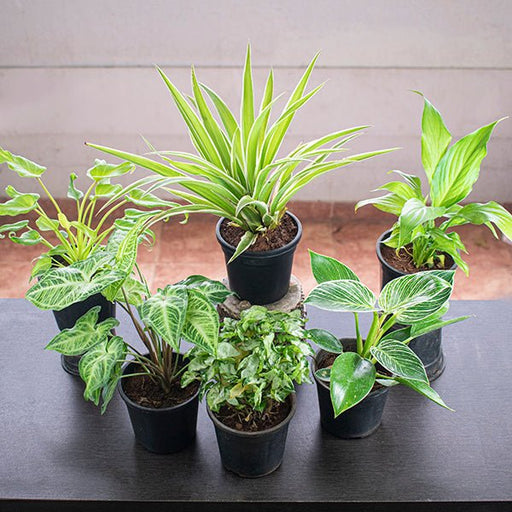
View full detailsBest 6 Plants for Perfect Indoor Garden Transform your living space into a lush oasis with our curated collection of the Best 6 Plants for a...
View full detailsBest 6 Plants for Perfect Indoor Garden Transform your living space into a lush oasis with our curated collection of the Best 6 Plants for a...
View full detailsMini Succulent Garden Pack Transform your space with our Mini Succulent Garden Pack, featuring a delightful collection of 4 any variety beautiful s...
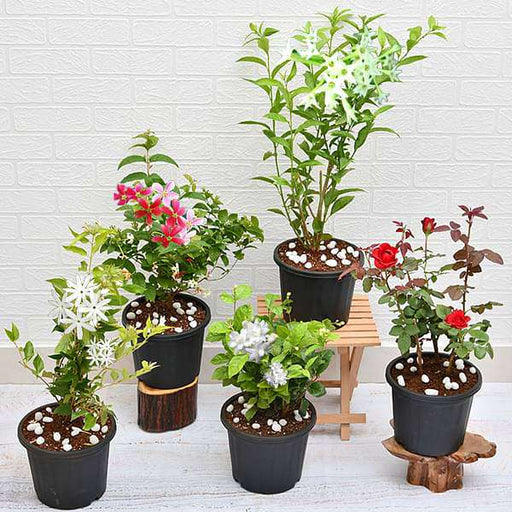
View full details5 Best Fragrant Plants Transform your garden or indoor space into a fragrant paradise with our curated selection of the 5 Best Fragrant Plants. Th...
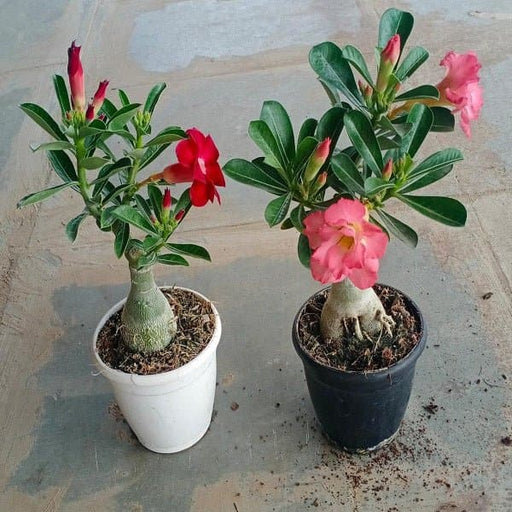
View full detailsSet of 2 Bonsai Looking Grafted Adeniums Transform your indoor or outdoor space with our exquisite Set of 2 Bonsai Looking Grafted Adenium...
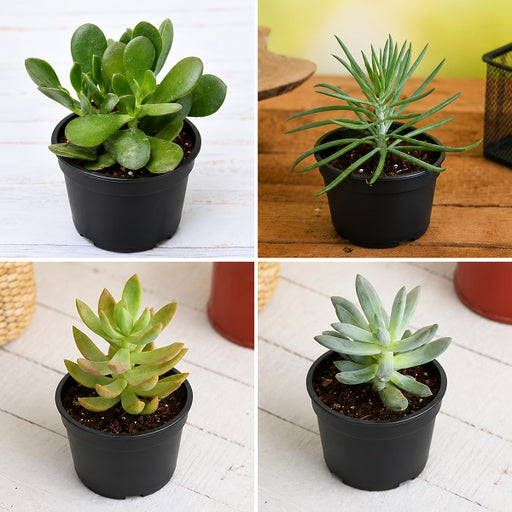
View full detailsTop 4 Die Hard Succulents Pack Note: Plants included in this pack will be delivered in a 3-inch nursery pot (any color). Transform your indoor or ...
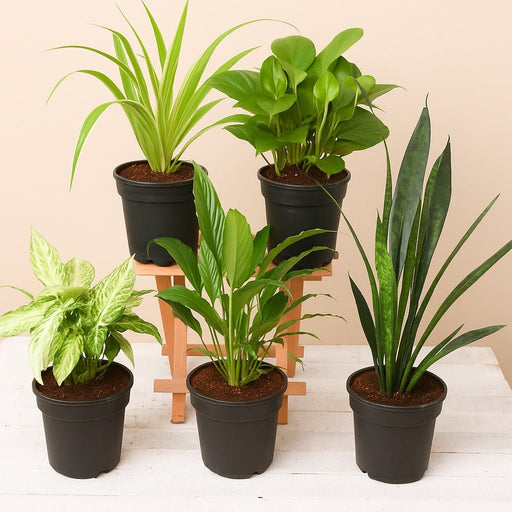
View full details5 Best Indoor Plants Pack Transform your living space into a lush oasis with our '5 Best Indoor Plants Pack.' This carefully curated collection fe...
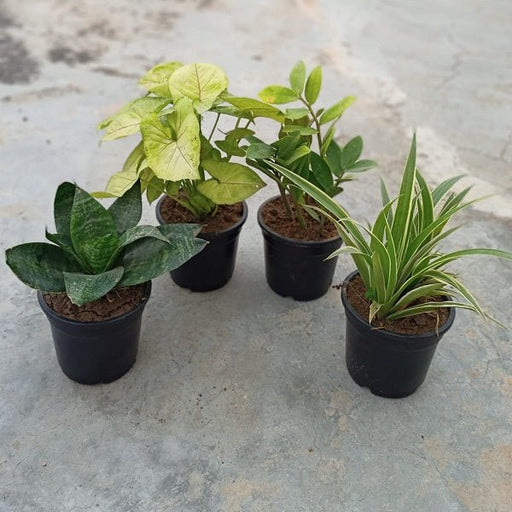
View full detailsSet of 4 Evergreen Air Purifier Plant Pack Transform your indoor space into a lush, green oasis with our Set of 4 Evergreen Air Purifier Pla...
View full detailsTop 5 Pollution Killer Plants Pack Transform your living space into a breath of fresh air with our 'Top 5 Pollution Killer Plants Pack'. This care...
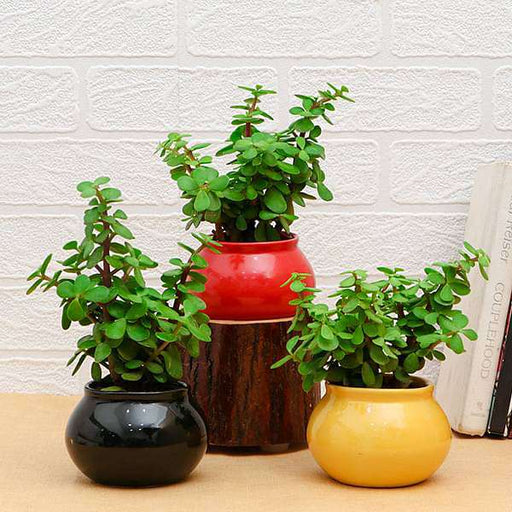
View full detailsPack of 3 Good Luck Jade Plants in Ceramic Pots Bring a touch of nature into your home with our Pack of 3 Good Luck Jade Plants, featuring...
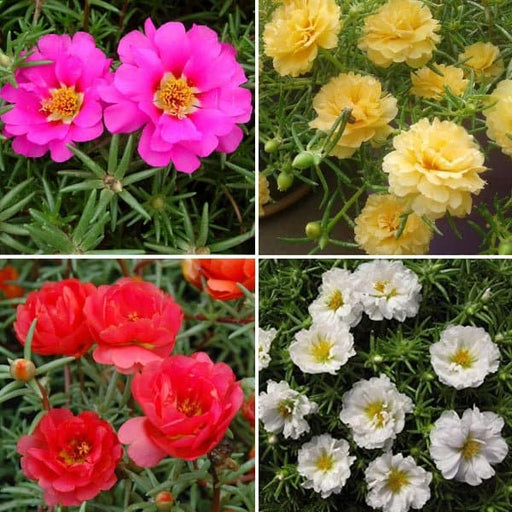
View full detailsPortulaca Garden Pack (4 Plants + 4 Black Pots) Note- You will get any color (Assorted) potted Porulaca plant with this pack. Transform your garde...
View full details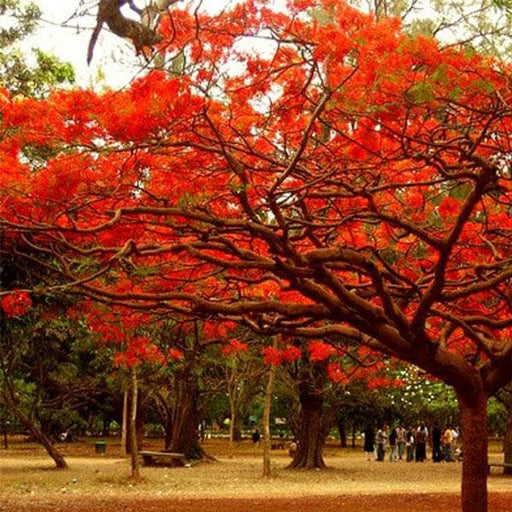







Leave a comment