
Expert Support
Available 24/7 via chat
Available 24/7 via chat
Junipers are among the most versatile and rewarding evergreen shrubs for Indian gardeners. Whether you're looking to add structure to your landscape, create a living border, or cultivate a stunning container plant, Juniper is your answer. With its compact, finely textured foliage and remarkable drought tolerance, this shrub thrives with minimal fuss—making it ideal for both beginners and seasoned gardeners in India's diverse climate zones.
Juniper (Juniperus communis, commonly called the Common Juniper or Cedar) is a hardy, evergreen shrub prized for year-round visual interest. The Juniper Erecta variety featured in Nurserylive's collection grows to a modest 18 inches (46 cm) in height with a 5-inch (13 cm) spread when young, making it perfect for containers and small garden spaces. Over time, junipers can reach heights of 1.5 to 15 feet depending on the variety and growing conditions, offering flexibility for various landscaping designs. Its tight, columnar form and soft, scale-like foliage create an elegant silhouette that complements both modern and traditional garden styles.
| Care Requirement | Details |
|---|---|
| Light | Full sun to partial shade |
| Water | Young plants: regular watering during dry spells for 2 years; Mature: drought tolerant |
| Soil | Well-drained; any soil type works |
| Temperature | Adaptable to wide range; avoid extreme heat or cold |
Junipers are sun lovers that perform best in full sun, which brings out the rich color and compact growth habit of their foliage. In Indian gardens with intense afternoon heat, especially in regions like Delhi, Mumbai, or Bangalore, partial shade during the harshest 2–4 PM hours can be beneficial during scorching summers, while still maintaining the plant's vigor. Plants receiving less than 6 hours of sunlight may become leggy and sparse, so position your Juniper in a bright location. If growing in containers, rotate the pot every 2–3 weeks to ensure even light exposure on all sides.
One of Juniper's greatest strengths is its low water requirement—a true blessing for water-conscious Indian gardeners. Young shrubs (during their first two years) should be watered regularly during dry spells to help establish a strong root system. In India's hot summers, this typically means watering deeply once or twice a week, depending on soil condition and rainfall. After the first two years, your Juniper becomes remarkably drought tolerant and can thrive on natural rainfall alone in most regions. During monsoon season, reduce watering significantly and ensure excess water drains away; junipers despise waterlogged soil and root rot is the primary killer of this otherwise hardy plant. As a rule of thumb, water only when the top inch of soil feels dry to the touch. Once established, even during India's dry seasons, junipers rarely need supplemental watering.
Junipers are undemanding when it comes to soil type—they thrive in sandy, loamy, or clay soil, provided it is well-drained. This adaptability makes them ideal for Indian gardens across different regions. Avoid poorly draining clay or soil prone to waterlogging; if your garden soil is heavy, amend it with sand, perlite, or coarse grit to improve drainage. For potted plants, use a quality potting mix mixed with 20–30% coarse sand or perlite for optimal results.
Fertilizer needs are minimal. Apply a balanced 10-10-10 fertilizer in spring (February–March in most of India) the year after planting, then continue every other year thereafter. Over-fertilizing encourages soft growth prone to pest issues, so resist the temptation to feed too frequently. Established, drought-tolerant junipers often need no feeding at all if planted in reasonably fertile soil.
Junipers adapt to a wide range of temperatures, making them suitable for gardens across India's diverse climate zones—from the cool hills of Himachal Pradesh to the hot plains of Rajasthan and the coastal humidity of Kerala. However, they do not tolerate areas of extreme heat or extreme cold. In India, this rarely presents a problem outside of specialized microclimates. Humidity is generally not a concern; junipers tolerate both dry air and humid conditions. In high-humidity coastal areas, ensure air circulation around the plant to reduce fungal issues during the monsoon.
Junipers are commonly propagated from semi-hardwood cuttings taken in summer (May–June). Select healthy, young stems about 4–6 inches long, remove the lower leaves, dip the cut end in rooting hormone, and plant in a well-draining propagation mix of equal parts peat and perlite. Keep the medium moist (not wet) and place the cutting in bright, indirect light. Rooting typically takes 4–8 weeks. Once roots develop, gradually acclimate the new plant to brighter light and reduce watering frequency. Another option is to purchase young plants like Nurserylive's Juniper Erecta, which are already established and ready to plant—saving time and ensuring reliable results.
Junipers are remarkably hardy, but a few issues can arise:
Ready to grow your own? Shop Juniper at Nurserylive →
Juniper, Juniperous Erecta - Plant The Juniper, scientifically known as Juniperous Erecta, is a striking evergreen shrub that adds a touch...
View full detailsCombo Constituents Includes the Parijat Tree (Night-Flowering Jasmine), a culturally significant plant with fragrant flowers. Description The Pari...
View full detailsDescription Raat Ki Rani (*Cestrum nocturnum*), also known as Night Blooming Jasmine, is a fragrant shrub native to the Caribbean and Central Ameri...
View full detailsJasminum sambac, Mogra, Arabian Jasmine - Plant Jasminum sambac, commonly known as Mogra or Arabian Jasmine, is a fragrant flowering plant...
View full detailsRajnigandha, Tuberose - Plant The Rajnigandha, scientifically known as Polianthes tuberosa, is a captivating perennial plant renowned for ...
View full detailsCitronella, Odomas - Plant The Citronella plant, scientifically known as Cymbopogon nardus, is a tropical grass renowned for its aromatic ...
View full detailsDamascus Rose, Scented Rose (Any Color) - Plant The Damascus Rose, also known as Rosa damascena, is a timeless symbol of beauty and romanc...
View full detailsMiniature Rose, Button Rose (Any Color) - Plant The Miniature Rose, also known as the Button Rose, is a charming and compact flowering plant that ...
View full detailsRosemary - Plant Rosemary (Rosmarinus officinalis) is a fragrant evergreen herb native to the Mediterranean region. Known for its needle-like leav...
View full detailsMadhumalti Dwarf, Rangoon Creeper - Plant The Madhumalti Dwarf, also known as the Rangoon Creeper (Quisqualis indica), is a stunning perennial vin...
View full detailsBest 6 Plants for Perfect Indoor Garden Transform your living space into a lush oasis with our curated collection of the Best 6 Plants for a...
View full detailsBest 6 Plants for Perfect Indoor Garden Transform your living space into a lush oasis with our curated collection of the Best 6 Plants for a...
View full detailsMini Succulent Garden Pack Transform your space with our Mini Succulent Garden Pack, featuring a delightful collection of 4 any variety beautiful s...
View full details5 Best Fragrant Plants Transform your garden or indoor space into a fragrant paradise with our curated selection of the 5 Best Fragrant Plants. Th...
View full detailsSet of 2 Bonsai Looking Grafted Adeniums Transform your indoor or outdoor space with our exquisite Set of 2 Bonsai Looking Grafted Adenium...
View full detailsTop 4 Die Hard Succulents Pack Note: Plants included in this pack will be delivered in a 3-inch nursery pot (any color). Transform your indoor or ...
View full details5 Best Indoor Plants Pack Transform your living space into a lush oasis with our '5 Best Indoor Plants Pack.' This carefully curated collection fe...
View full detailsSet of 4 Evergreen Air Purifier Plant Pack Transform your indoor space into a lush, green oasis with our Set of 4 Evergreen Air Purifier Pla...
View full detailsTop 5 Pollution Killer Plants Pack Transform your living space into a breath of fresh air with our 'Top 5 Pollution Killer Plants Pack'. This care...
View full detailsPack of 3 Good Luck Jade Plants in Ceramic Pots Bring a touch of nature into your home with our Pack of 3 Good Luck Jade Plants, featuring...
View full detailsPortulaca Garden Pack (4 Plants + 4 Black Pots) Note- You will get any color (Assorted) potted Porulaca plant with this pack. Transform your garde...
View full details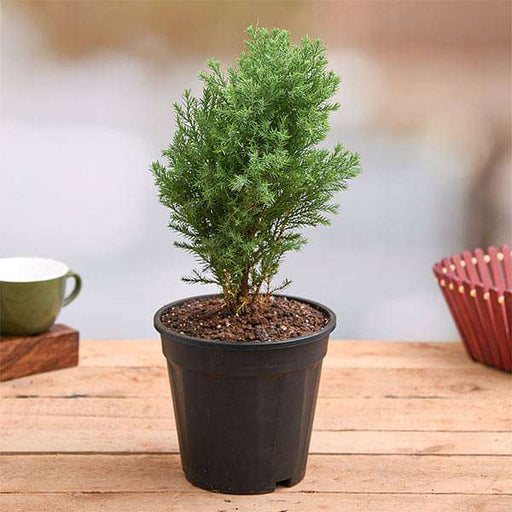























Leave a comment