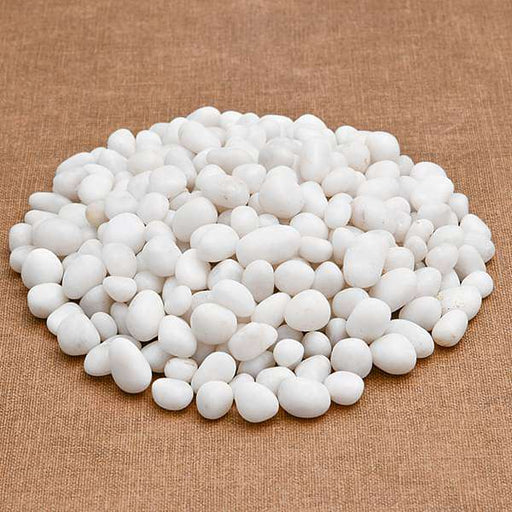
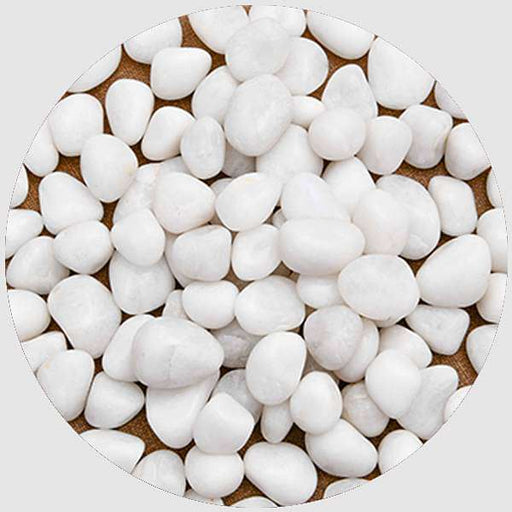
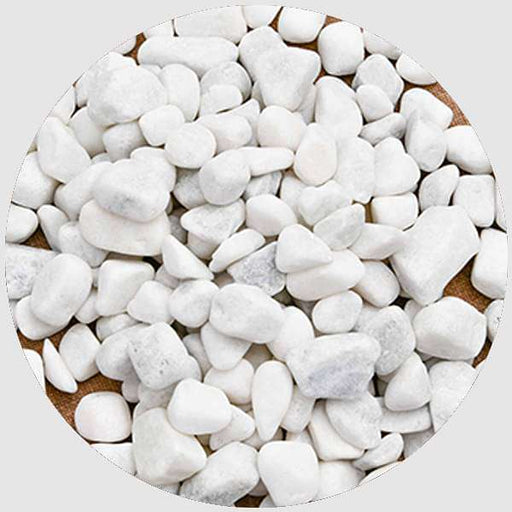
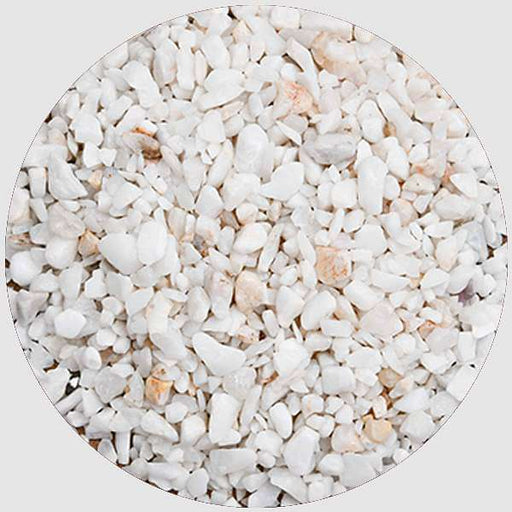
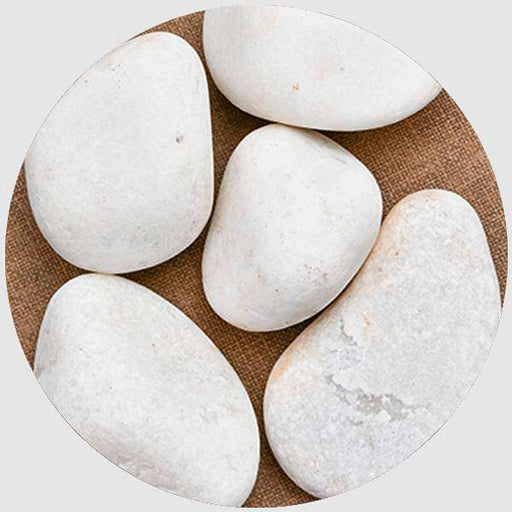
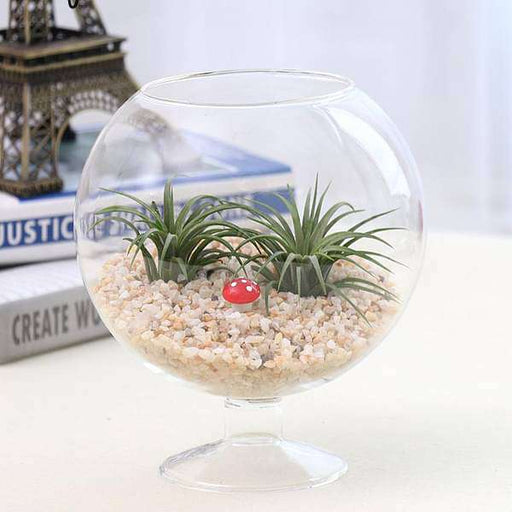
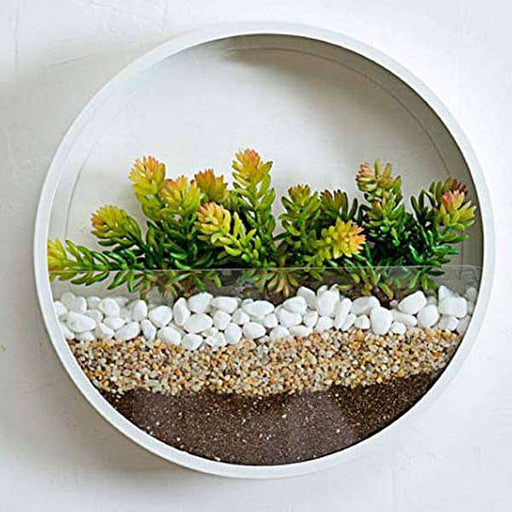
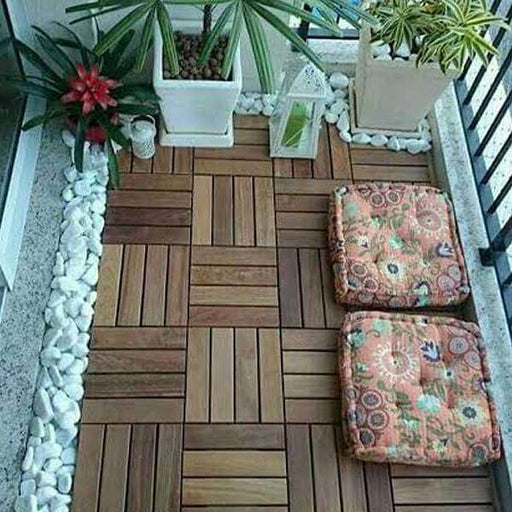
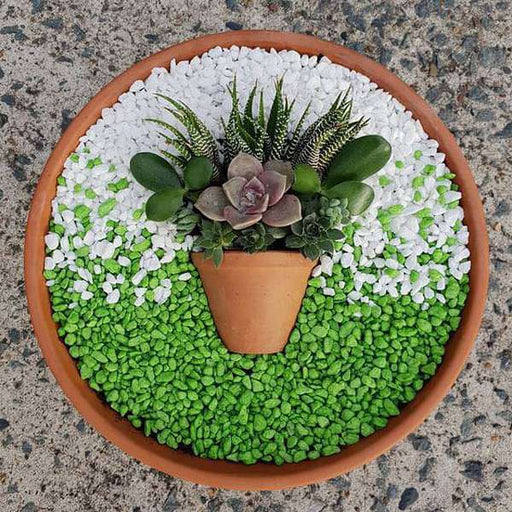
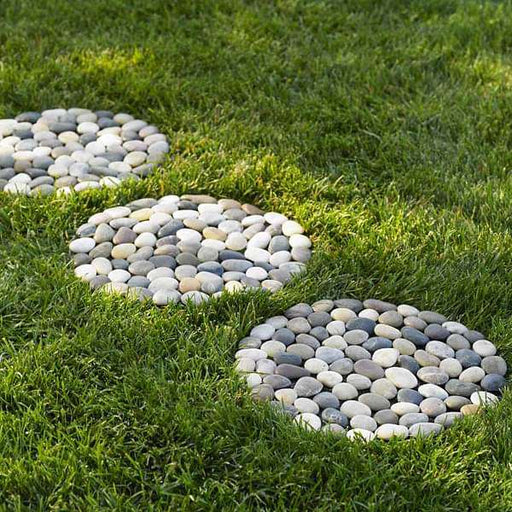
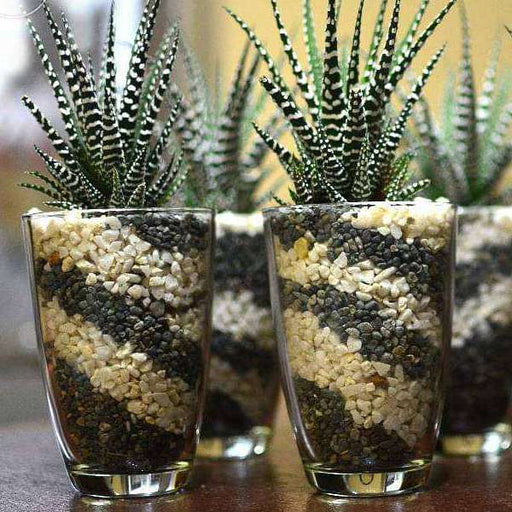
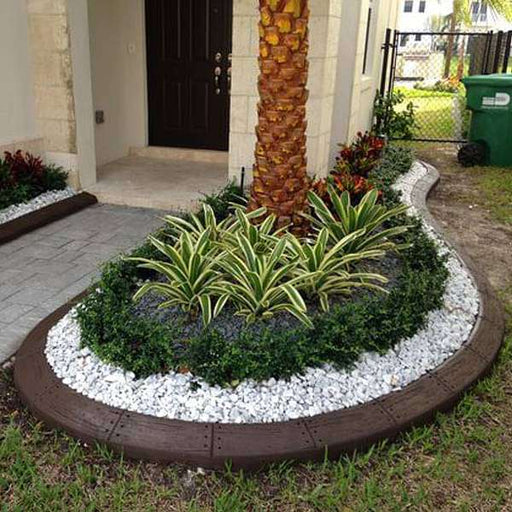
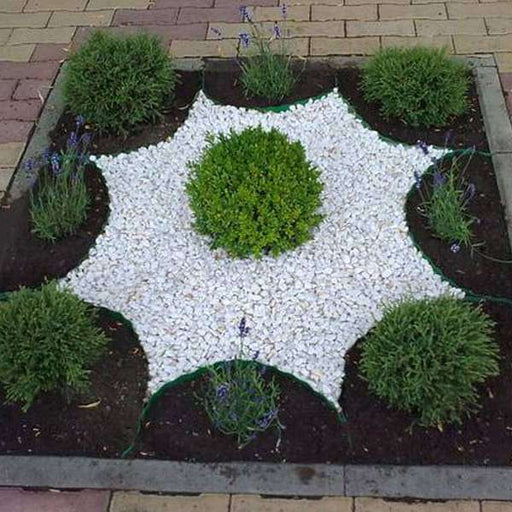
White polished marble pebbles are one of those small purchases that end up doing more work than you expect. The small size makes them flexible. You can use them as a top dressing on potted plants, which helps slow down moisture loss from the soil surface and keeps things looking tidy. They also work well in terrariums, around the base of bonsai, or in decorative trays and glass bowls.
The polished finish is the main difference from regular gravel. Unpolished stone has a matte, dusty look, while polished marble has a smooth, slightly glossy surface that reflects light. That's why it reads as brighter and cleaner in photos. The trade-off is that polishing makes the surface smoother, so it doesn't grip or anchor the way rough gravel does. For top dressing that's fine. For a drainage layer at the bottom of a pot, rough gravel is actually the better choice because water moves through it more predictably.
One thing worth knowing before you buy: marble is calcium carbonate, and it will slowly break down in acidic conditions. Over time that can nudge your soil pH upward. For most houseplants and succulents this won't matter, but if you're growing acid-loving plants like camellias, blueberries, or certain ferns, it's something to keep in mind. Rinse the pebbles before use too, since polished stone often carries a fine dust from the tumbling process that you don't want settling into your soil.
A 1 kg bag of small pebbles covers roughly the surface of a few medium pots, depending on how thick you lay it. For a single 6-inch pot, a thin layer goes a long way. Nurseryilive sells this size if you want to try it on a small scale before committing to a bigger bag. Just don't expect them to stay pristine forever outdoors, since rain and soil splash will eventually dull that polish.